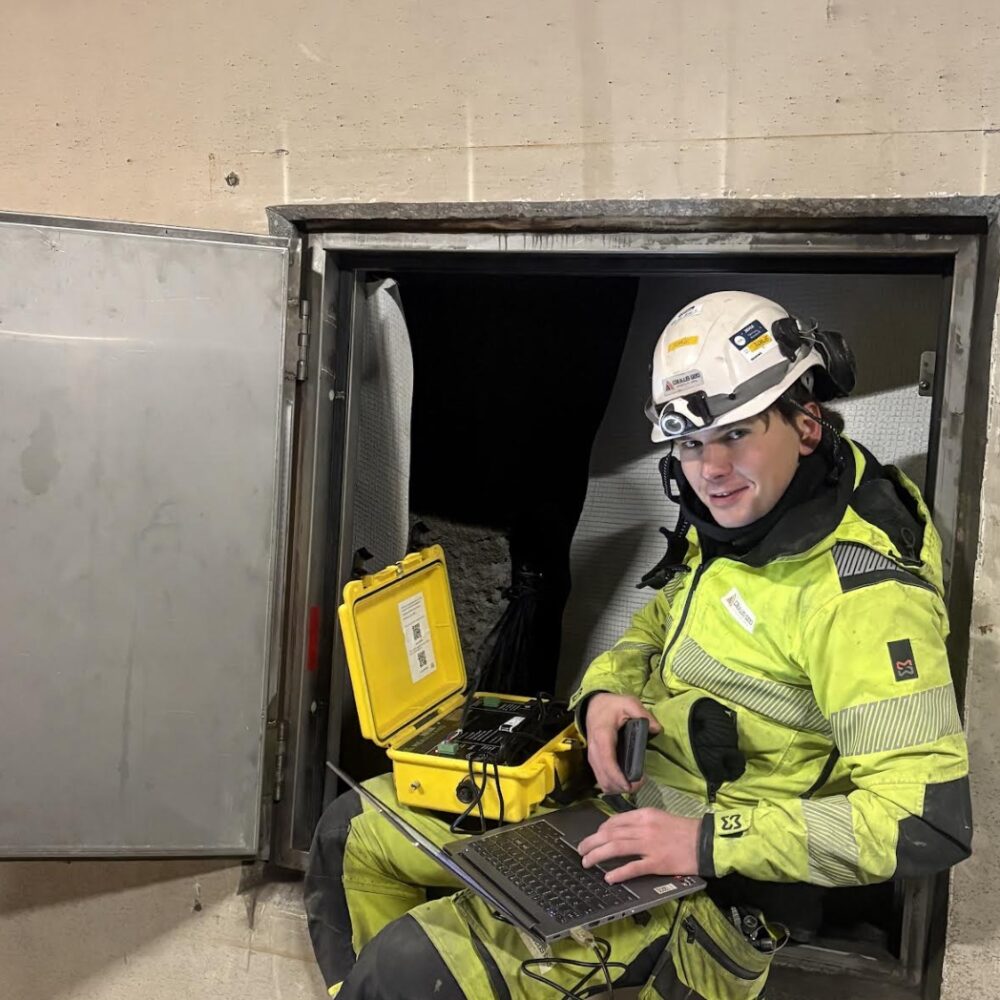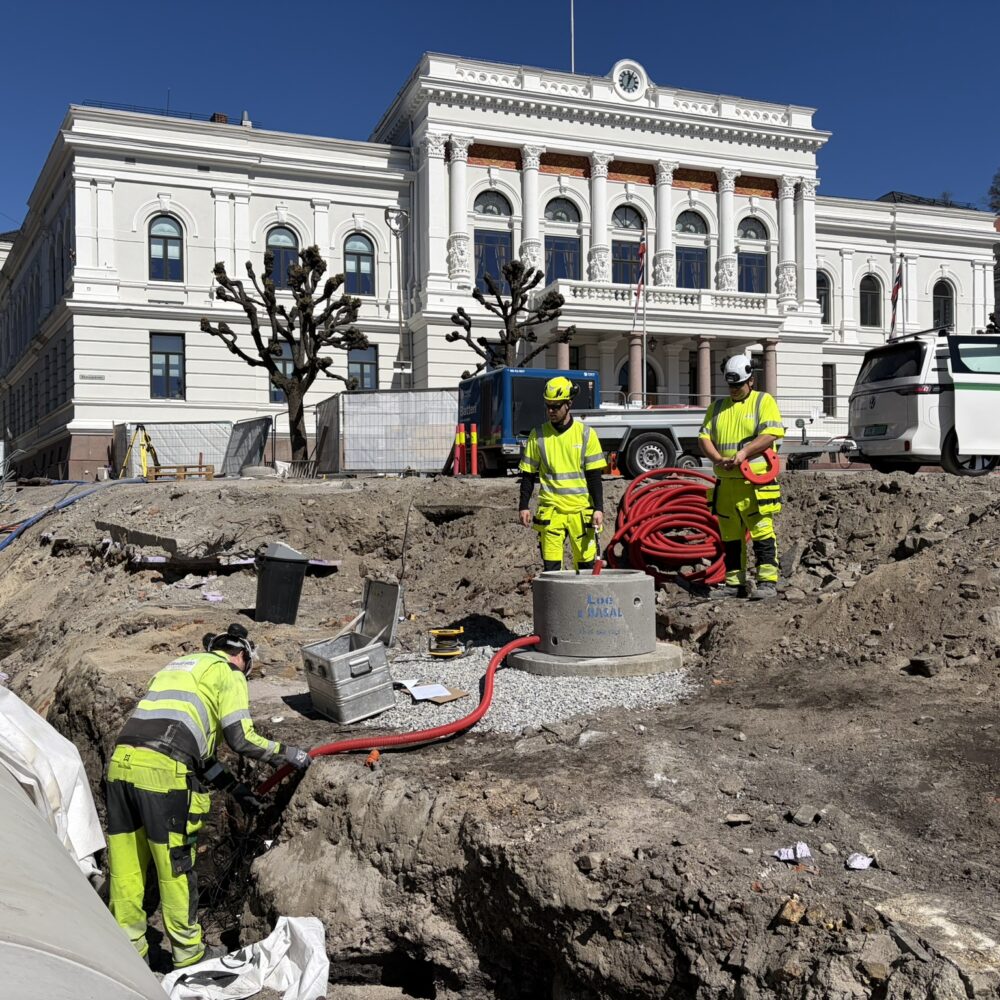

Smart sensors detected microplastics

Smart sensors detect microplastics - "It shows that sensors can detect substances and pollutants that they cannot actually measure," says environmental geologist Jørgen Engebretsen.
22. July 2022
Written by Rino Andersen
Smart sensors detect microplastics - "It shows that sensors can detect substances and pollutants that they cannot actually measure," says environmental geologist Jørgen Engebretsen.
Cautus Geo is one of Europe's leading technology companies in automatic monitoring of structures, land, water, climate and the environment. The company has developed a wide range of sensor technology and a proprietary web solution, Cautus Web, for automatic and continuous collection, processing, analysis and notification based on data from various sources.
SensorTUNNEL
Cautus Geo has expanded the use of smart sensors in the SensorTUNNEL project. This is a pilot project with the Norwegian Public Roads Administration and NIVA for a new, sensor-based system for monitoring tunnel wash water. In the project, the sensors have measured substances and pollutants that cannot be measured directly.
- Sensors cannot actually detect suspended solids and microplastics. The project looked for various correlations between findings, indications and other substances. Measurement data was collected in Cautus Web," says Engebretsen.
The pilot project was carried out in Oslo. It was finalised earlier this year. The results are now available.
- They confirm the hypotheses. This means that smart sensors can provide new opportunities for automatic and continuous monitoring in new environmental areas," says Engebretsen as he summarises Cautus Geo's results from the SensorTUNNEL pilot project.
The conclusion is that sensor technology can be one of the answers to monitoring and documenting emissions.
Secure real-time data
Emission permits are granted for new areas. Tunnels are one of the newer areas where emission permits are now granted.
- "Automatic systems that provide real-time data are a good idea. It provides a better picture over time, compared to the instantaneous measurement you get with a water sample," says Engebretsen.
This is where smart sensors can come in and contribute. SensorTUNNEL shows that sensors can be used to measure emissions that the sensors cannot actually measure.
- This opens up new opportunities for using technology to replace manual testing. For users, this means updated knowledge in real time, a better overall picture, more accurate results and lower resource utilisation," says COO Atle Gerhardsen of Gautus Geo.
Great potential
The SensorTUNNEL pilot project is no coincidence. Emission permits are now issued for tunnels. There, runoff is a major problem. Roads and traffic are a source of various pollutants, including particles, metals, oil compounds and microplastics. In addition to road runoff, discharges of contaminated washing water are a possible source of pollution.
Tunnel wash water collects pollutants over a longer period of time and is more polluted than stormwater runoff from roads. Discharges of tunnel wash water can pose a significant risk of damage to the environment.
Purification measures have therefore been established in several tunnels. One such measure is sedimentation basins where the water is pumped to a basin where it sits for about three weeks before being pumped out. Much of the pollution will then settle so that the water that is pumped out is much cleaner.
Many of the tunnels have discharge permits under the Pollution Control Act. Water samples are then required. These are usually taken manually before discharge and sent to a laboratory for analysis.
Want to do further research
The Norwegian Public Roads Administration writes more about the project on its website.Project managers Lene Sørlie Heier and Lene Jacobsen summarise the experiences from SensorTUNNEL in the article. They describe the results as follows:
- We have identified a desire and a need for a more informative and cost-effective monitoring system for contaminated tunnel wash water.
- Using water quality sensors, we have shown that turbidity measurement can also provide information about other parameters such as suspended solids (particles) and car tyre particles (microplastics), and that it is possible to use signals from such a sensor as a proxy for other substances.
- We have demonstrated how sensor measurements can be presented visually in web-based solutions (Cautus Web).
- We have identified a need for further R&D to explore the preliminary results in more detail. There is a need to re-examine several different sensors and different pollutants in tunnel washwater. There is also a need to test this type of sensor-based monitoring in several tunnels and in real time.
The partners in SensorTUNNEL
- The Norwegian Public Roads Administration at Climate and Environment in Transport and Society has been the project owner. Lene Sørlie Heier has been technically responsible and Lene Jacobsen administratively responsible.
- NIVA (Norwegian Institute for Water Research) has been the R&D partner and Sondre Meland the project manager.
- Cautus Geo AS has been the company's partner and Jørgen Engebretsen has had the main responsibility for customising the measurement system and installing sensors in the field.
- Kjersti Wike Kronvall (Norwegian Public Roads Administration) has also assisted the project. Kjersti has extensive experience from the Environmental Section of the Directorate of Public Roads and now also as Outer Environment Coordinator in connection with tunnel rehabilitation in Oslo.